
A flame-retardant package that passes a thin polypropylene plaque can fail in a glass-filled housing, an automotive trim part, or a woven fabric. You will be able to match the PP grade, chemistry, processing window and named fire test to the end use, then request evidence that reflects Ahmedabad’s heat, humidity and your actual part geometry.
Key takeaways
- Start with UL 94 wall thickness and IEC 60695 glow-wire requirements.
- Check additive compatibility with the PP grade, fillers, pigments and stabilisers.
- Demand dosage-versus-performance data across your actual processing temperature window.
- Qualify smoke, ageing, mechanical results and supplier documentation before approval.
Start with the end-use fire test, not the chemical name
Define the required end-use fire performance before choosing a polypropylene additive. For an injection-moulded electrical housing, specify UL 94 at the actual wall thickness, then add IEC 60695 glow-wire testing when ignition or flammability under a heated wire matters.
| End use | First test or requirement | What it does not prove |
|---|---|---|
| Injection-moulded electrical housing | UL 94 at specified wall thickness; IEC 60695-2-11, IEC 60695-2-12 or IEC 60695-2-13 where relevant | UL 94 V-0, UL 94 V-1 and UL 94 V-2 are specimen-scale vertical-burning classes, not complete fire-safety ratings |
| Automotive interior PP | Applicable vehicle requirement, including FMVSS 302 for horizontal flame spread | A vertical V-0 package is not automatically suitable |
| Single insulated wire or cable | IEC 60332-1-2 | Bundled-cable flame spread, smoke density, acidity or corrosivity |
| Films, fibres, woven PP, pipes and construction products | A named ASTM or IEC method for the product geometry | A plaque result may not represent orientation, dripping, thickness or heat transfer |
A V-0 result does not establish smoke toxicity, heat-release rate or ignition resistance. For wire and cable, confirm whether IEC 60332-1-2 covers the product or whether bundled-cable testing also applies; the package may need to change.
Before discussing dosage, record:
- Polypropylene end use, part thickness, colour and geometry
- Test method, conditioning temperature and humidity, and required pass class
- Filler content, orientation and whether the part drips during testing
Match the package to the PP grade and formulation
PP homopolymer versus copolymer is a formulation decision, not a naming detail. Random and impact copolymers, fillers, reinforcement and processing history alter dripping, melt flow and char formation, so qualify the complete grade at its actual wall thickness.
| Grade or formulation | Why the package changes | What to screen |
|---|---|---|
| PP homopolymer | Predictable matrix, but not a proxy for copolymer performance | Resin grade, thickness and melt flow |
| Random or impact copolymer | Ethylene content changes ignition, impact and dripping | Copolymer type and impact performance |
| Talc-filled PP | Talc changes stiffness, heat transfer and residue formation | Talc percentage, dispersion and weld lines |
| 20–40% glass-fibre-filled PP | Fibres create melt-drip pathways, expose polymer at the surface and disrupt char integrity | Actual fibre content, orientation and thickness |
| Mineral-filled compounds | Filler loading changes dilution, density, flow and heat transfer | Mineral identity, particle treatment and dispersion |
| Impact-modified PP | Rubber phases alter ignition and can weaken mechanical retention | Modifier content, impact strength and ageing |
| Recycled PP | Polyethylene, pigments, ash, oxidation and previous thermal history vary by lot | Screen every feedstock lot; do not extend a virgin certificate |
| PP woven fabric | Orientation, thin sections and fabric construction change burning and dripping | Yarn, weave, coating and named fabric test |
Magnesium hydroxide decomposes around 300–350 °C, fitting PP processing better than aluminium trihydrate, which releases water around 180–220 °C. High magnesium hydroxide loading can reduce elongation, impact strength, weld-line strength and melt flow. An intumescent package combines ammonium polyphosphate (APP), pentaerythritol and melamine; encapsulated or surface-treated APP can improve compatibility and moisture resistance.
Verify the actual grade and package, not a powder name.
Demand dosage evidence and protect the processing window
No universal formulation percentage proves PP performance: compare candidates through a formulation matrix. Request the flame-retardant dosage range, additive package ratio and concentration at which the specified resin reaches its stated class at the actual thickness and colour. Require results before and after heat ageing, humidity conditioning and reprocessing.
Ask the supplier to define:
- PP melt-processing temperature, drying temperature and drying time
- Maximum residence time, residence time shear sensitivity and moisture limit
- Moisture handling instructions for APP, melamine-containing packages and treated mineral additives
- Compounding data covering screw torque, melt pressure, die pressure, throughput, cycle time, melt flow, dispersion and visible surface defects
Ahmedabad’s monsoon humidity makes sealed storage and conditioning part of the qualification. ATH can release water inside a PP process around 180–220 °C; high mineral loading can raise screw torque, reduce flow and create surface defects. Excessive shear or prolonged residence can damage an intumescent package.
| Option | Main comparison | Record before approval |
|---|---|---|
| Halogenated | Lower loading and efficient flame retardancy; antimony trioxide can increase density, smoke and residue | Restricted-substance compliance, smoke and residue |
| Halogen-free | Higher loading may reduce stiffness, impact, colour or surface finish | Mechanical properties and finish at target dosage |
| APP or melamine intumescent | Sensitive to moisture, shear and heat history | Drying, residence time, dispersion and post-process fire class |
Run a compounding and moulding trial on production resin. Compare the actual halogen-free package against the customer’s restricted-substance list, not against nominal loading alone.
Separate flame rating from smoke, ageing and mechanical performance
A V-0 pass is only the starting point. Record tensile strength, impact resistance, elongation, stiffness, density, melt flow, weld-line strength, surface finish, colour, odour, electrical insulation and long-term heat ageing on the actual moulded part.
| Option | Benefit | Trade-off to verify |
|---|---|---|
| High mineral loading | Improves flame resistance | Lower elongation, impact resistance and melt flow |
| Glass-filled PP | Increases stiffness | Less predictable dripping and char behaviour |
| Intumescent package | Builds a protective char | Migration, bloom or performance loss after heat ageing |
Treat flame retardancy versus smoke suppression as separate objectives. A V-0 result does not prove low smoke, low toxicity or low corrosivity. Measure smoke directly on the actual colour, wall thickness, filler content and moulded geometry.
Zinc borate, molybdate-based additives, metal oxides and selected mineral fillers can reduce smoke or promote char in particular PP systems. They can also change colour, density, electrical properties and corrosion behaviour, so compare those results with the fire classification.
Humidity conditioning matters in Ahmedabad storage and production. Test material at 23 °C and 50% relative humidity, or the buyer’s specified condition, against an accelerated humid ageing set. Keep additive packaging sealed and record warehouse exposure before compounding; moisture pickup can alter dispersion and ignition behaviour.
Build a supplier qualification file before approving the PP additive
Do not approve an additive from a V-0 claim alone. Your supplier qualification file must tie the result to the exact PP grade, homopolymer or copolymer type, filler percentage, recycled content, colour, specimen thickness, moulding conditions, conditioning, test laboratory and complete UL 94 or named ASTM/IEC result.
Request these records before compounding:
- A technical data sheet, safety data sheet, certificate of analysis, batch number, recommended drying instructions, storage limits and declaration against the customer’s restricted-substance list.
- PP-specific test data showing dosage, processing temperature and performance in the production resin. Request trial samples of that resin, not a generic PP plaque.
- Results for the actual fibre or mineral content, finish and thickness, plus heat-ageing, humidity-conditioning and reprocessing data. Recycled PP requires lot-based checks because polyethylene, pigments, ash and oxidation alter additive demand.
Compare the package choices on the same evidence:
| Option | Practical advantage | Control or risk |
|---|---|---|
| One-pack flame retardant | Simplifies dosing, reduces weighing errors and shortens plant trials | Less control over individual trade-offs |
| Separate flame retardant and synergist | Lets you tune antimony trioxide, zinc borate, smoke suppression and mechanical properties | More weighing, inventory and trial control |
| One-pack versus separate system | Both require production-scale confirmation | Broad application language does not prove compatibility with a particular PP finish, fibre content or processing temperature |
A local formulation partner can expose those gaps during compounding and moulding. Include Niknam Chemicals Pvt. Ltd in the comparison only when its technical team supplies PP-specific dosage data, processing guidance and test results for the actual grade.
Approve the package after production-scale parts pass the end-use test, then retain lot-based verification for recycled or variable feedstock.
Related product
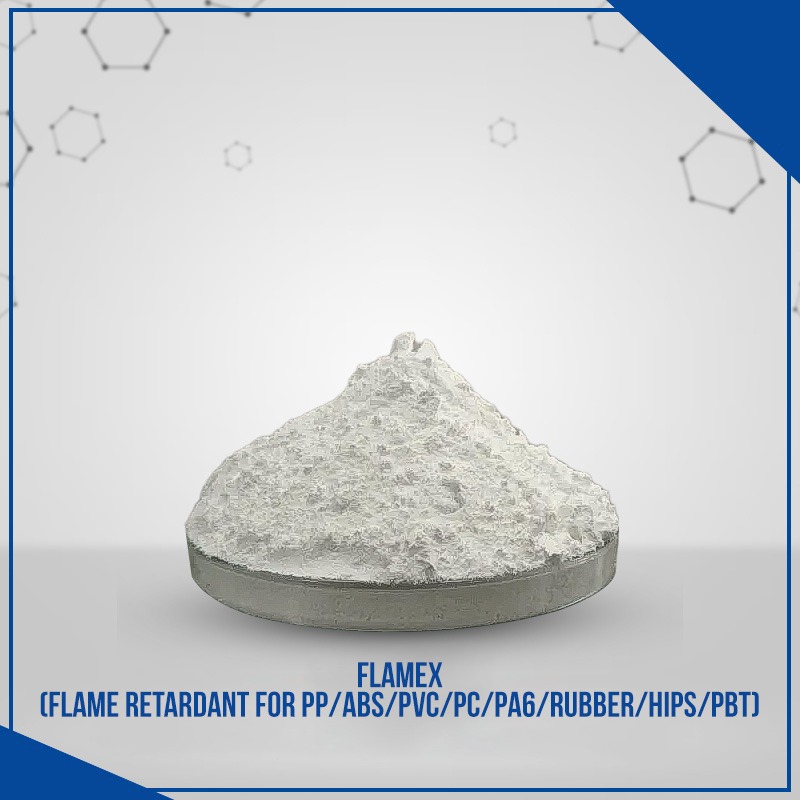 | flame retardant additives Flamex ( Flame Retardant for PP ABS PVC PC PA6 RUBBER HIPS PBT ) FLAMEX ( One Pack Flame Retardant ) manufactured by our company is widely used in PP,PA, PE,PC ,PC/ABS, PVC , Rubber ,PBT, PET, XPS, EPS, PU ,PVC,... View product → |
Frequently asked questions
Which fire test should you specify before selecting a polypropylene flame retardant?
Start with the end-use test. For an injection-moulded electrical housing, specify UL 94 at the actual wall thickness; add IEC 60695 glow-wire testing when heated-wire ignition or flammability matters.
How do you match a flame-retardant package to a polypropylene formulation?
Check compatibility with the PP grade and the complete formulation, including fillers, pigments, stabilisers and other additives. Compare performance in the finished formulation rather than in neat resin alone.
What dosage evidence should a polypropylene additive supplier provide?
Request dosage-versus-performance data produced in a formulation close to yours, along with processing limits and evidence that the target rating remains achievable across the intended processing window.
Which properties must you assess beyond the flame rating?
Review smoke generation, ageing resistance and mechanical performance alongside the flame classification. A package that achieves a rating but causes unacceptable smoke, brittleness or property loss is not suitable.
What belongs in a supplier qualification file for a polypropylene flame retardant?
Keep the technical data sheet, safety data sheet, batch traceability, test reports, formulation and dosage details, processing conditions, quality documents and records from your own validation tests.